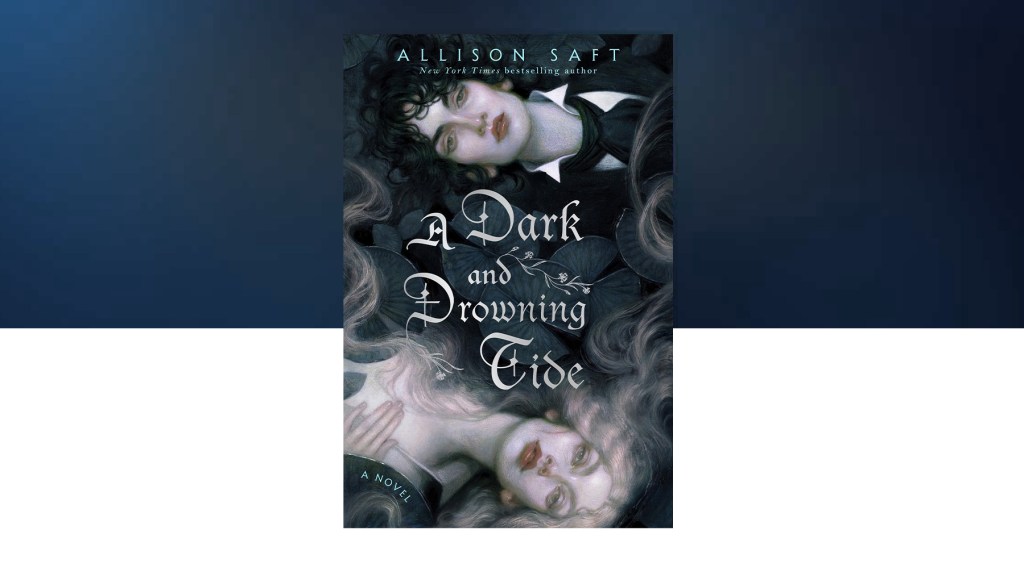
On folklore, water, and the ghosts that refuse to rest.
Dark Academia, enemies to lovers, and magical folklore.
An alluring combination, on paper. A Dark and Drowning Tide became my first read of 2026, and in many ways, it could not have been otherwise.
An Empire Built on Origins.
The novel carries us into the fantasy world of Brunnestaad, a newborn empire forged under the reign of King Wilhelm. Driven by the unfulfilled dream of his father to unify all territories under a single banner, Wilhelm seeks legitimacy, proof that his rule is sanctioned not only by conquest, but by destiny itself.
Thus, the Ruhigburg Expedition is conceived: a scholarly and political venture meant to uncover the power of Ursprung – the origin, the root, the source. Leading this endeavour is Professor Ziegler, an academic working directly under the crown, whose authority bridges scholarship and sovereignty.
Scholars at Odds: A Fractured Enemies to Lovers.
At the heart of the expedition lies the novel’s central tension: Professor Ziegler must choose a second-in-command. The candidates could not be more opposed:
Lorelei Kaskel, folklorist and keeper of old myths, and
Sylvia von Wolff, a celebrated naturalist, golden, vibrant, and unapologetically present.
In all honesty, the enemies-to-lovers dynamic felt forced and uneven throughout the novel. Rather than arising organically from mutual conflict or ideological opposition, it is largely driven by Lorelei’s unresolved trauma and deep-seated insecurities. The hostility feels one-sided, bordering on immature, particularly jarring given that Lorelei is consistently praised for her academic discernment and judgment.
“Anger, at least, was a balm to the rawness of her grief. But she was too tired to sharpen it into a blade, so she wound it around herself like amor.”
Her behavior often contradicts her supposed intellectual clarity. She criticizes others for prejudice while being guided almost entirely by her own. Even her investigation into the mysterious death of her tutor becomes less a rational inquiry and more an emotional projection onto those around her.
That said, Lorelei’s past, particularly her Yevanverte ancestry, is undeniably formative, and the novel does not shy away from showing how history scars the present.
War, Persecution, and Historical Echos.
One of the most compelling aspects of the novel is its clear inspiration from World War II. The Yevanverte people function as a powerful allegory for Jewish persecution: hatred, systemic prejudice, and oppression saturate the narrative.
Likewise, colonialism and religious fanaticism surface through the figure of Johann, whose obsession with purity, witchcraft, and bloodline evokes the rhetoric of the Templar Knights. His fixation on Lorelei as a “witch,” and his belief that only the “worthy” should wield magic, reflects how ideology becomes a weapon.
The aftermath of war permeates the story: characters shaped by conquest, assimilation, and loss. Yet, these themes often remain on the surface, hinted at rather than fully excavated. The ghosts are present, but rarely confronted.
Sylvia Von Wolff: Light that has known Darkness.
In contrast, Sylvia von Wolff emerges as one of the novel’s most endearing and compelling figures. Passionate, emotionally open, and deeply connected to her inner world, she embodies a form of resilience born not from denial, but from survival.
Sylvia has known war, pain, and despair and instead of hardening, she chose to live fully. The resentment Lorelei harbours toward her feels painfully transparent: Sylvia is everything Lorelei longs to be but cannot yet allow herself to become.
“Despite everything that has happened, you have made me believe there is beauty to be found. Your infectious joy, your whimsy, your complete and utter lack of self-preservation…You are everything I am not and everything I admire.”
Sylvia becomes a mirror, a vessel for Lorelei’s projected anger and self-loathing. Where Lorelei equates vulnerability with weakness, Sylvia stands as living proof that openness can be strength, and that tenderness does not negate power.
Folklore, Repetition, and the Weight of Untold Answers.
Folklore and myth are deeply woven into the narrative, guided by Lorelei’s expertise. The stories of the various lands that form Brunnestaad are beautifully structured and thematically consistent, but therein lies the problem.
Many myths follow the same moral pattern, resulting in repetition rather than enrichment. This sameness extends to other narrative habits: recurring mentions of Lorelei and Sylvia’s height difference during banter, or Lorelei’s internal monologues reiterating how she is hated for her origins, again and again.
Meanwhile, far more intriguing threads are left unresolved, like the button found in Ziegler’s study and the symbolism or the reason never explained; the true nature of what happened between Ludwig and Johann; or what Sylvia endured during the war that transformed her so deeply.
These elements are introduced, gestured at, then abandoned, leaving the reader suspended, not in mystery, but in frustration.
Water as Origin, Power and Silence.
Where the novel truly shines is in its worldbuilding and magical system. Magic is intrinsically linked to water, the Ursprung of all things.
Water is life, memory, and danger. Calm on the surface, unfathomable beneath. It mirrors the characters themselves: composed exteriors hiding depths shaped by history and loss. The connection between magic, the body, and water feels intuitive and symbolically rich, grounding the fantasy in something elemental and ancient.
A Rush Ending and Lingering Absence.
The conclusion, however, feels rushed and emotionally dissonant. Certain events unfold without sufficient grounding, leaving behind a bittersweet aftertaste rather than catharsis.
Instead of resolution, the novel closes with absence. Questions unanswered, threads untied. From a Dark Academia perspective, it offers neither closure nor the pleasure of lingering clues to theorise over. No marginalia to haunt the reader. Not even crumbs.
Final Thoughts.
A Dark and Drowning Tide is a novel rich in atmosphere, thematic ambition, and historical resonance. Yet, it struggles with emotional balance, narrative repetition, and underdeveloped resolutions.
What could have been a profound meditation on trauma, power, and myth instead feels like a text holding itself back, afraid to fully descend into its own depths.
And perhaps that is the greatest irony of all: for a story so obsessed with origins, it never quite reaches the source.
With love,
A.
 ADRIANNA DAGMARA
Leave a comment