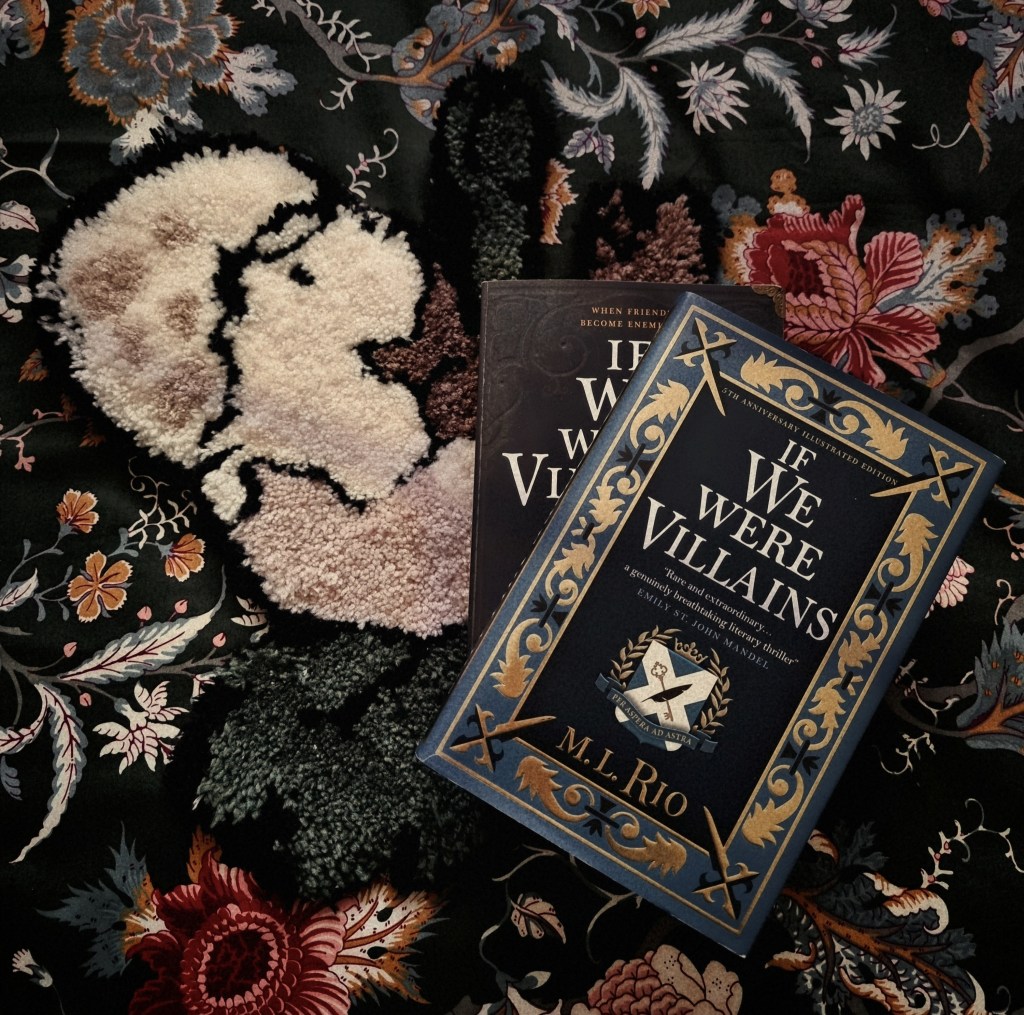
How do you begin a review of a book that consumed your soul and altered the chemistry of your brain?
Enter Stage: Soul Consumed.
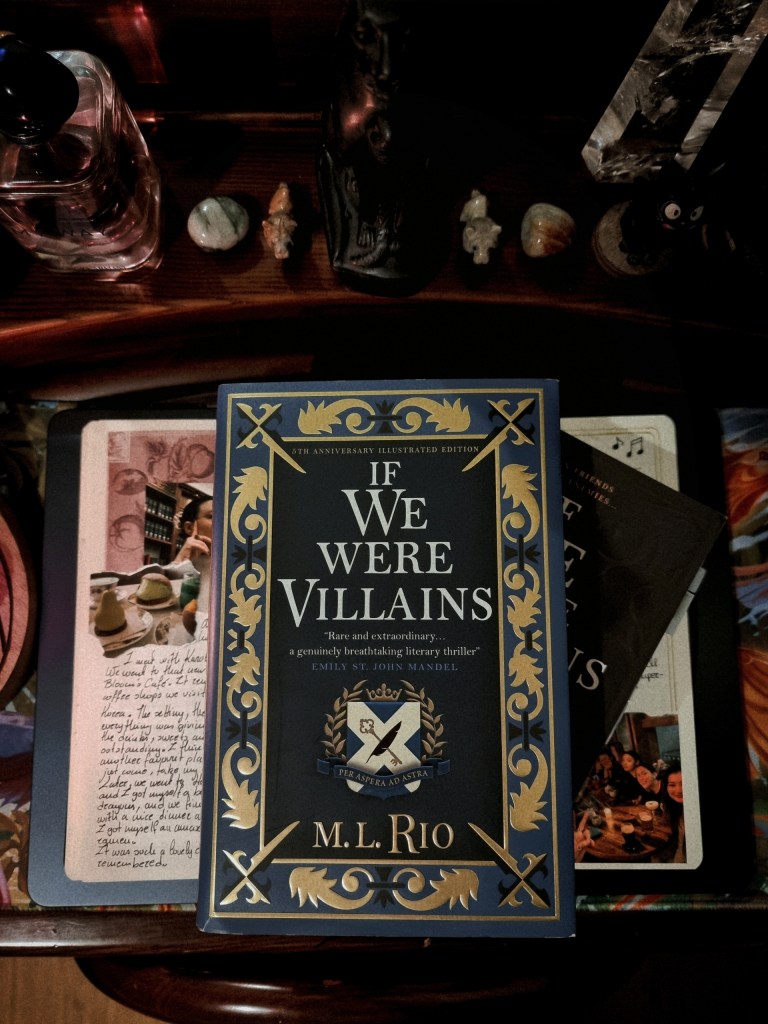
If We Were Villains by M. L. Rio sat on my TBR for a long time, patiently waiting for the perfect moment—the perfect timing to step into my life and become my whole new universe. Especially for someone like me, who loves Shakespeare almost as much as the thespians in this story—and blames him for everything, just as they do.
A Tragedy in Five Acts.
Although my favourite side of Shakespeare’s writing is his comedies, the Bard knew better: life is full of tragedies, penned by the human heart and all its hungry desires. We are fragile creatures when it comes to our egos, and when the objects of our desire are at stake—especially the ones we believe belong to us—things can turn devastatingly ugly.
But before we plunge into spoilers and deeper reflections, let’s talk about the structure of the story.
The book is divided into five acts, echoing the classical format of theatre and following the natural rhythm of dramatic tension. A single-act play might capture a moment. A three-act play gives us a rising and falling arc. But the five-act structure—this is the slow burn, the complete tragedy.
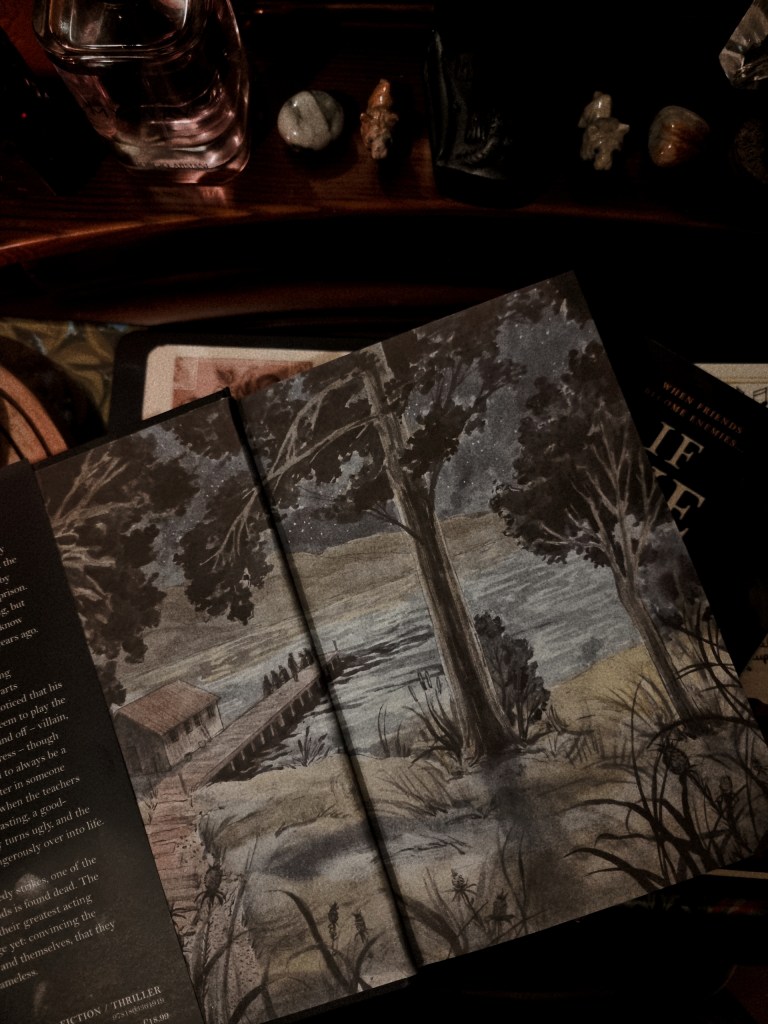
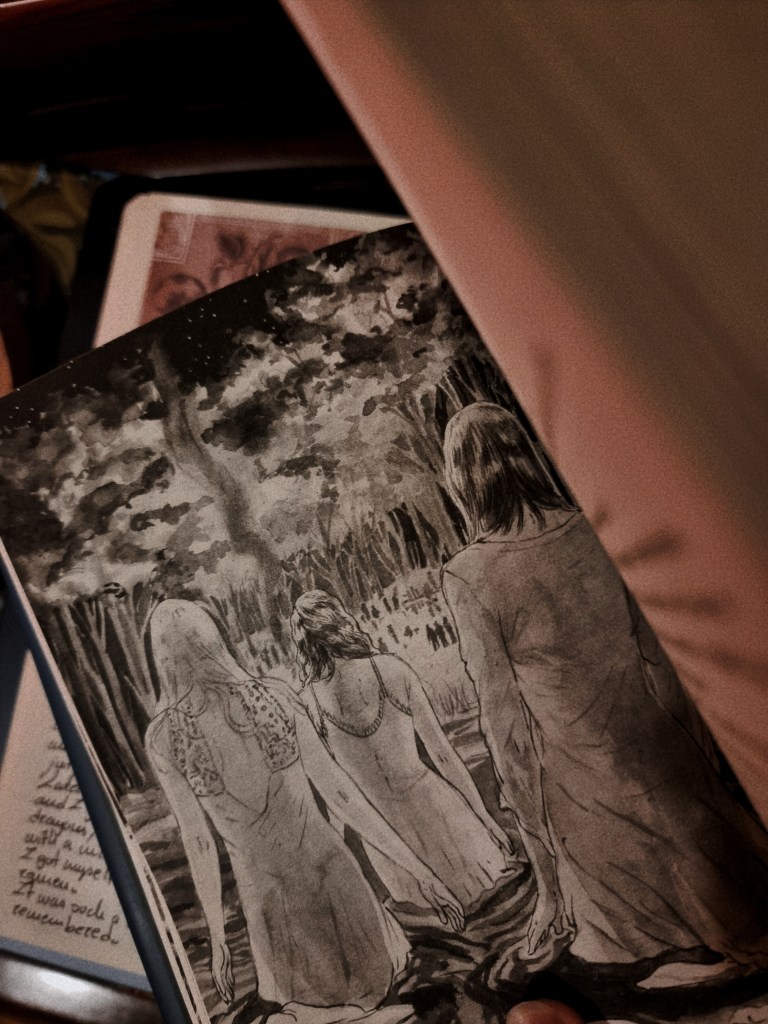
If We Were Villains follows this structure through a clear narrative arc: we open with the exposition—Oliver, now in prison, is visited by Colborne, giving us a glimpse of the aftermath before we are led back in time. We then meet the ensemble cast and their roles, not only on stage but in life. The inciting incident ignites the slow build of tension, culminating in the third-act climax. What follows is the unraveling—the consequences of desire, betrayal, truth, and love. And finally, we are left in the silence of the denouement, with only the echoes of what once was.

The Poison in the Mirror.
As a Dark Academia novel, with an obvious academic setting, Shakespeare’s quotes are always perfectly timed to mirror the lives of the characters. You might love this book—or hate it. For me, it became all-consuming, in both mind and soul. Because how fragile are human feelings and loyalty toward one another?
(From this point forward, this review will contain spoilers. If you haven’t read the book yet, feel free to return once you have.)
This book is about obsession and human emotion in its rawest, most unfiltered form. What price are we willing to pay when the things we love begin to tremble and fall? What are we willing to sacrifice to achieve what we desire? Are we prepared to face the consequences?
As much as we can feel empathy for others, we’re also capable of finding their flaws repulsive—measured against our own internal standards. But here’s the truth: most of the time, we despise what mirrors our deepest fears and desires. We’re quick to hate what we secretly long to be—or the impact we wish we had on others, but can’t quite reach.
That’s why, while reading this book, you might find yourself disliking Meredith—her physical confidence, the way she carries herself, or even seeing her as vain or condescending. Yet, there’s a striking moment in the story where she reveals her vulnerability, admitting she’s afraid no one will ever take her artistry seriously because of her appearance. And that’s the catch: we often only praise strength and courage when it aligns with our own comfort—not when it challenges the limitations we place on ourselves.
And then there’s this quote from Oliver:
“By the time my turn came, we had grown so numb to one another’s insecurities that my saying that I was the least talented person in our year didn’t seem to surprise anyone.”
Facing our weaknesses is a form of incomparable strength. But people often grow numb to those who acknowledge their flaws—because it forces them to look inward. It’s easier to suppress our own issues than to give them voice. Easier to project than to confront. Even if it means turning on fictional characters, rather than stain the pristine image we have of our own consciousness.
Because the line between being a hero and a villain is much thinner than we think—and what we justify for ourselves might very well be the downfall of others.
Between Love and Delusion.
What fascinates me even more is that, after finishing the book, most readers still wholeheartedly believe in the strong bond between Oliver and James—even though Oliver is an unreliable narrator. We only know what he chooses to believe is true.
I’m not denying the existence of a powerful connection. But the timing of many incidents, especially toward the end, is so sharply calculated by James that it’s hard to see them as mere coincidences. Even Oliver remarks on James’ meticulousness:
“Too critical for a scholar as meticulous as James to overlook.”
Too critical even for the timing of their “almost a brotherly kiss, but not quite.”
The Tragedy of James.
To me, there was always something about James. He admitted himself that “he immersed himself completely in every character he played, but sometimes he couldn’t quite leave them behind and learn to be himself again.” And there is no greater torment to an artist’s soul than losing oneself in the art they create. It’s both a blessing and a curse when we don’t know where to draw the line.
I believe that, at some point, James lost himself in the roles he played—on stage and off. The torment of his soul extended far beyond Oliver’s perspective. James was not only a performer of characters, but a performer of life. The truth of his story will always remain hidden behind the curtain. But to me, James was both a hero and a villain. He played his part with masterful precision, right to the end—whether he got away with it all, or not.
Maybe he simply needed a blank page—free from Richard, from Shakespeare, and even from Oliver’s expectations. Because when you carry the weight of everyone else’s expectations for too long… sometimes:
“It’s easier now to be Romeo, or Macbeth, or Brutus, or Edmund. Someone else.”
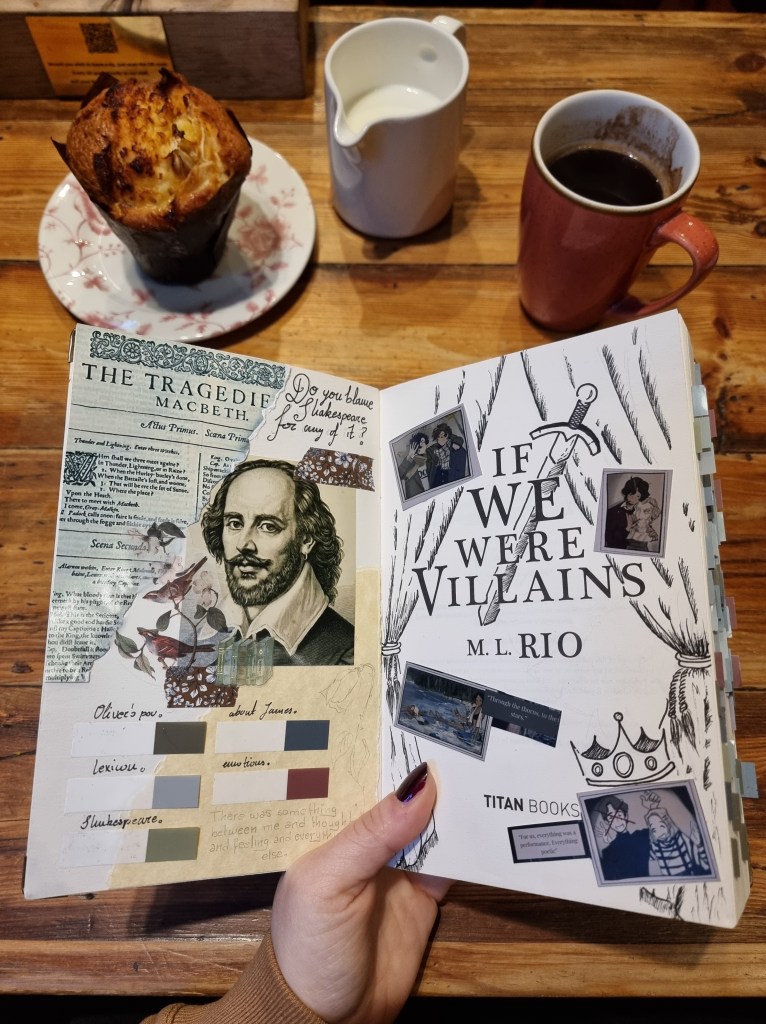
Exit Stage Left: Someone Else.
Overall, I know that I’m not over this book—and I’m certainly not over James. I don’t blame Oliver for idolising him. James caught my attention the moment his name graced the page. But time teaches us to release expectations. To let people and stories unfold in their rawest forms—beautiful or cruel, noble or self-serving.
If We Were Villains will keep its place on my shelf and in my heart for a very long time—if not forever.
With love,
A.
 ADRIANNA DAGMARA
Leave a comment